06 julio 2020

MEDICOS POR LA VERDAD - NO TENGAS MIEDO


----

 -


-----------------------------


EL ENCIERRO DE SOCIEDADES ENTERAS FUE UNA DECISIÓN CATASTRÓFICA QUE CAUSÓ UN DAÑO ENORME Y NINGÚN BENEFICIO

Expertos de prestigio dicen que el Sars-Cov-2 no es un virus asesino y denuncian la campaña mediática para crear miedo


“La manipulación mediática hace más daño que la bomba atómica, porque destruye los cerebros”. 
Son palabras que Noam Chomsky pronunció hace años, pero que estos días adquieren un valor renovado por las bombas de racimo que día a día nos lanzan los medios de comunicación al servicio del sistema a propósito de la pandemia política. Me veo obligada a decir, una vez más, que estamos ante una crisis política, no sanitaria. 
Lo venimos advirtiendo hace tiempo, no porque seamos adivinos, sino por el mero análisis geopolítico de los acontecimientos. No hace falta saber mucho de virus para deducir que toda esta situación no es sino un escenario ad hoc para la actuación del cuadro de actores dirigidos por los ejecutores del Nuevo Orden Mundial. 
¡Es hora de despertar!

A lo largo de estos meses, hemos criticado en cada artículo las dosis de miedo insuflado en vena, día tras día, hora tras hora, con el número de muertos, la peligrosidad del Sars-Cov-2, responsable de la Covid-19, el uso de la mascarilla, el confinamiento, y los partes de guerra con señores de uniforme y galones para amenazarnos desde todos los ángulos: con la enfermedad y la muerte por un lado, y la policía y las multas por otro. Solo nos quedaba aplaudir por el balcón y ser obedientes para obtener el título de buen ciudadano, como en la hipotética república platónica o en la actual China totalitaria. ¡Es hora de despertar!

A estas alturas, no deben cuadrarles las cuentas y andan buscando contagiados y asintomáticos, señalando sospechosos y confinando edificios para mantener viva la mentira. 
Incluso han enviado al ejército, no sé si con tanques o solo con los fusiles. El caso es crear noticia y que el miedo no decaiga. Por eso la amenaza constante del rebrote y de otro posible confinamiento, cosa que, salvo algunos grupos “despiertos”, muchos ciudadanos están pidiendo a gritos para sentirse a salvo. Es la prueba de que la sociedad está muy enferma, sumida en la ignorancia, contagiada de otro tipo de virus, aparte de padecer un síndrome de Estocolmo agudo. ¡Es hora de despertar!

En estos meses extraños, paralelamente a nuestra visión de los hechos hemos ido dando opiniones de expertos, no de los expertos al servicio del sistema y los gobiernos de turno, sino expertos de verdad que solo se deben a su código deontológico y a la verdad. Ellos han ido dando a lo largo de estos largos meses, su visión científica –no interesada— sobre el uso de mascarillas, las cuarentenas y los confinamiento masivos, la psicosis colectiva, el miedo infundado, la letalidad del virus y la campaña de desinformación de los medios de comunicación. Vamos a refrescar estas ponderadas opiniones, que si bien ya nos hicimos eco de ellas y haber sido publicadas en otros medios, nunca está de más una pincelada de cordura, en medio de tanta sinrazón. Vamos con el panel de expertos:


Klaus Püschel, Jefe de Medicina Forense del Hospital Universitario Hamburgo-Eppendorf nos impresionó por sus palabras contundentes en dos entrevistas en sendos programas prime time de dos cadenas de TV de Alemania. El doctor, a diferencia de lo ocurrido en otros lugares, entre ellos España, hizo autopsias a todos los muertos con el virus en Hamburgo. Su conclusión es que la Covid-19 es una enfermedad mortal solo en casos excepcionales. En la mayoría de ellos es una infección viral mayormente inofensiva. Cuando la periodista de televisión le preguntó qué había encontrado en los cuerpos muertos por Covid-19, contestó con rotundidad que en el cien por cien de los casos había encontrado las patologías serias preexistentes que produjeron la muerte de los pacientes. Explicó que es completamente inapropiado hablar de un virus asesino o decir que esto es como una guerra. Asegura que el coronavirus está afectando a la sociedad de una manera completamente inapropiada y exagerada. “Es el miedo lo que siempre carcome a las almas”, dice, y añade que no tenemos que estar especialmente atemorizados, ya que hay muchos otros peligros normales en la vida que nos afectan mucho más.


El profesor Joel Kettner dijo al respecto en una entrevista en la CBC: “Nunca había visto algo así, nada parecido a esto. No estoy hablando de la pandemia, porque he visto unas treinta, una cada año, se llama gripe… y otros virus de enfermedades respiratorias que no siempre sabemos cuáles son, pero nunca he visto esta reacción y estoy tratando de entender por qué. El profesor Kettner es Director Médico del Centro Internacional de Enfermedades Infecciosas de Manitoba y exdirector de Salud Pública.


El profesor Knut Wittkowsky es un destacado epidemiólogo de Alemania, que fue durante veinte años jefe de Bioestadística, Epidemiologia y diseño de investigación en el Centro de Ciencias clínicas y relacionales en la Universidad Rockefeller, aparte de haber trabajado durante quince años con Klaus Dietz, destacado epidemiólogo de la Universidad de Tubinga. 
El profesor Wittkowsky fue de los primeros en decir que el peligro del Sars-Cov-2, causante de la Covid-19 es comparable al de una gripe. Sobre la cuarentena, dice que aparte de que el pico ya se había superado en la mayoría de los países antes de encerrar a los ciudadanos, insiste en que el encierro de sociedades enteras fue una decisión catastrófica que causó un daño enorme y ningún beneficio, puesto que todas la medidas fueron contraproducentes, y añade que en lugar de cuarentenas, distanciamiento social, cierre de escuelas, mascarillas, pruebas masivas y vacunas, la vida debería haber continuado con normalidad para desarrollar la inmunidad de la población lo más rápido posible. Apunta que la medida más importante es la protección de los hogares de ancianos. Preguntado sobre la vacuna dice que no es necesaria.


La opinión del profesor Michael Osterholm, director del Centro de Investigación y Política de enfermedades infeccionas de la Universidad de Minnesota es muy similar. Insiste en que hay que proteger solamente a los vulnerables y dejar que el resto de la población con riesgo prácticamente nulo continúe con su ritmo normal de vida y vaya generando la llamada inmunidad de rebaño. Dice que la idea del confinamiento es insostenible y perjudicial.

Klaus Kohnlein, médico internista de la Universidad de Kiel, Alemania, declaró que las pruebas PCR no son fiables –como hemos apuntado en un artículo anterior— y asegura que son usadas para alimentar la falsa pandemia. Es autor del libro, publicado en 2007, Virus Mania. How the Medical Industry Continually Invents Epidemics, Making Billion-Dollar Profits at our Expense (Virus manía. Cómo la industria médica inventa continuamente epidemias y obtiene ganancias de miles de millones de dólares a nuestra costa. Grave. Sin más comentarios.


El doctor Pietro Vernazza, médico jefe de infectología de Suiza declaró que la epidemia es leve para la gran mayoría de las personas y que la mayoría de las muertes que figuran en la estadística no se deben únicamente al coronavirus sino al resto de patologías preexistentes. Hace hincapié en la protección individual de las personas de riesgo e incide en que alcanzar la inmunidad de grupo también protege a las personas vulnerables.

El doctor John Oxford es virólogo y profesor de la Universidad de Londres, además de un destacado experto en gripe, incluida la gripe aviar y la gripe española de 1918 y el VIH (sida). Dijo al respecto: “Veo este brote de Covid-19 como una epidemia fuerte de gripe”. Y reconoció que estamos sufriendo una epidemia mediática.


El premio Nobel y profesor de biología de la Universidad de Stanford, doctor Michael Levitt, también dice que la cuarentena es un enorme error e insiste como sus colegas en la protección para las personas de riesgo.

El reconocido experto en Salud Pública de la Universidad de Yale, doctor David I. Katz, explica que para salvar muchas más vidas en esta pandemia debemos remplazar la dañina cuarentena general por una estrategia de protección a los vulnerables y dejar trabajar y producir a los que tienen un riesgo prácticamente nulo.


El profesor Hendrik Streeck, epidemiólogo y Director del Instituto de Virología de la Universidad de Boom, Alemania, dice que la cuarentena se aplicó mal y que sus datos muestran que la tasa de letalidad de infección del Sars-Cov-2 es mucho menor que la supuesta. Opina que es erróneo esperar a una vacuna.

Scott Atlas es profesor médico investigador de la Universidad de Stanford. En un artículo de su puño y letra publicado en abril en el diario The Hill, con el título “Llegaron los datos, paren el pánico y acabemos con el aislamiento total”, compartido más de un millón de veces, dice que quienes piden continuar con el bloqueo, ignoran cinco puntos clave: 
1) La gran mayoría de las personas no tienen un riesgo significativo de morir por Covid-19. 
2) Proteger a las personas mayores en riesgo para eliminar el colapso de los hospitales. 
3) Las políticas de confinamiento impiden conseguir la inmunidad de grupo prolongando el problema. 
4) Hay personas muriendo porque no están recibiendo atención médica debido a “proyecciones hipotéticas”. 
5) tenemos una población en riesgo claramente definida que puede ser protegida con medidas específicas.


El profesor Johan Giesecke, epidemiólogo de Suecia, fue durante años el primer jefe científico del Centro Europeo para la Prevención y el Control de Enfermedades, expresa en varios artículos de la prensa sueca que la cuarentena no es una medida que esté basada en la evidencia y, por tanto, no es una medida científica. Lo correcto es proteger a la pequeña minoría vulnerable, para propiciar la inmunidad de la sociedad, y añade que la Covid-19 es, en general, una enfermedad leve, similar a la gripe, y que fue la alarma creada lo que asustó a la gente.

El profesor Sucharit Bhakdi es médico especialista en microbiología y epidemiología de infecciones. Dirigió el Instituto de Microbiología e Higiene de la Universidad Johannes Gutenberg de Mainz, Alemania, durante 22 años, y es uno de los médicos investigadores más citados de Alemania. Dice al respecto: 
“Todas estas medidas están llevando a la autodestrucción y al suicidio colectivo por algo que es solo un fantasma”. Ha denunciado que la política y los medios de comunicación han llevado a cabo un intolerable alarde de miedo y una campaña de desinformación irresponsable. Asegura que la crisis fue provocada por políticos y que poco tiene que ver con el virus y que una vacuna contra el coronavirus es innecesaria y peligrosa. El profesor Bhakdi impulsó la creación de la “Asociación de profesionales médicos y científicos para la salud, la libertad y la democracia”.

La doctora Sunetra Gupta, profesora de epidemiología de la Universidad de Oxford, indica que la tasa de letalidad por infección es como máximo la de una temporada de gripe y que la evolución de la pandemia no parece estar afectada por las decisiones tomadas y lo explica así: “Diferentes países han tenido distintas políticas de cuarentena. Sin embargo, el patrón de comportamiento es prácticamente uniforme en casi todos los contextos. Hemos visto la epidemia crecer, remitir y desaparecer, casi como un reloj mecánico”. Y añade: “Nos hubiera ido mejor si no hubiésemos hecho nada o hubiésemos hecho algo diferente, como prestar atención en proteger a los vulnerables. Según su opinión estar confinados fue el motivo por el que murieron 50 millones de persona durante la pandemia de gripe española.

El profesor Karol Sikora, profesor de medicina de la Universidad de Buckingham, exdirector del programa de cáncer de la OMS y uno de los directores del Rutherford Healh, dijo que “el miedo es más letal que el virus” y señala que cuando se escriba la historia el miedo habrá matado a muchas más personas que el virus. Reivindica volver a la vieja normalidad, no a una “nueva normalidad”. Respecto al confinamiento, asegura que la epidemia ha tenido los mismos resultados en países que aplicaron cuarentenas como en los que no la aplicaron, y que la mejor medida para enfrentar cualquier pandemia es ayudar a las personas que tienen el virus, es decir, actuar como se debería hacer con la gripe cada año. También declaró que no es necesaria una vacuna.

El doctor John P. A. Ioannidis es profesor de medicina, epidemiología y Salud Pública de la Universidad de Stanford y un destacado investigador de la investigación científica. Es codirector del Meta-research Innovation Center de Stanford y uno de los científicos más citados de todos los tiempos. Ha hecho múltiples contribuciones a la medicina basada en evidencia, a la epidemiología y a la investigación clínica.
Es famoso dentro del mundo académico por haber demostrado que una gran proporción de las publicaciones científicas no cumplen con el rigor necesario. Por esto, el British Medical Journal lo calificó como “el flagelo de la ciencia descuidada”. Se puede decir, sin riesgo a caer en la exageración, que Ioannidis es uno de los epidemiólogos más destacados de nuestros días. En cuanto a la epidemia, en el mes de marzo, Ioannidis señaló que no existía evidencia de que el nuevo coronavirus representara una amenaza extraordinaria y que ni mucho menos era tan extraordinaria como se anunció en un principio. Un mes después, en abril, tras observar el desarrollo de la enfermedad reafirmó que esta pandemia es relativamente ordinaria, comparable a la de la gripe, para la población general. 
Sí resaltó que los residentes en lugares de ancianos y los pacientes de hospitales deben recibir protección adicional. También se posicionó sobre la destructiva reacción del mundo ante el coronavirus con estas palabras: “Es como un elefante atacado por un gato doméstico; frustrado e intentando evitar al gato, el elefante salta de un acantilado y muere”.

El ejemplo no puede ser más expresivo. Recordó que encerrar a personas sanas y sin riesgo y transferir pacientes con Covid-19 a hogares de ancianos fue absurdo. Esto se hizo particularmente en Italia y en Estados Unidos. Es una explicación al número de muertes, pero también hay que tener en cuenta la picaresca. Es lamentable, pero en algunos hospitales de Estados Unidos si se certificaba muerte por neumonía el centro facturaba 5.000 dólares, si la causa era Covid-19, el monto ascendía a 13.000 dólares, pero si además se había utilizado respirador la suma se elevaba 30.000 dólares. Por increíble que parezca, es cierto. Son los riesgos del laicismo, que trae consigo la deshumanización.

De todos los expertos, el argentino Pablo Goldschmidt, reputado virólogo, bioquímico y farmacéutico, aparte de invitado de universidades de todo el mundo, es quizá quien más claro habla y quien tiene una visión más panorámica del asunto. Sin pelos en la lengua declaró al periódico Clarín que la sociedad se estaba volviendo loca con algo que no tiene sentido.

 “Cuando alguien le mete miedo al pueblo, hace lo que quiere con él”, manifestó. Dice que se creó un pánico que hace de circulo vicioso, culpa a la Organización Mundial de la Salud de generar la psicosis colectiva que estamos viviendo y opina que no podemos seguir siendo víctimas de la presión internacional. Se refiere tanto a la OMS como a los organismos oscuros que han organizado el plan maquiavélico de carácter político, disfrazado de sanitario, para esclavizar a la humanidad.

Como acabamos de ver, los expertos llegan prácticamente a las mismas conclusiones: que el Sars-Cov-2 no es un virus asesino, que la Covid-19, en cuanto a peligro, es comparable a la gripe estacional, que el miedo es injustificado, que la cuarentena era innecesaria, que el uso de la mascarilla salvo en casos muy puntuales es perjudicial, que la mayoría de las muertes relacionadas con el nuevo coronavirus no fueron causadas por el virus sino con el virus, y que el grupo más vulnerable, es decir, los mayores o personas con enfermedades serias preexistentes podría haber sido protegido con las medidas convencionales.
El mejor estadístico del Reino Unido, David Spiegelhalter, presidente del Centro Winton para el “Entendimiento público de riesgos y evidencias”, del laboratorio de estadística de la Universidad de Cambridge, dice que la posibilidad de que una persona mayor se enferme de Covid-19 es la misma que la de enfermarse de cualquier otra cosa. Añade que el nivel de ansiedad de la gente debe ser proporcional a los riesgos que enfrenta, y condena a los medios por jugar con los números presentando una situación alejada de la realidad.

¿Se atreverá nuestro inefable doctor Simón o el ministro Illa, tan acostumbrados a no admitir preguntar y a mentir, a mantener un cara a cara público con alguno de los expertos citados?
¿Quizá pedirán el comodín de la llamada y los auxiliará alguno de los misteriosos expertos que nunca hemos tenido el gusto de conocer?
Lo cierto es que, mientras los científicos aludidos dan la epidemia por remitida y Alemania se prepara para eliminar el uso de la mascarilla el 4 de agosto, y en la mayoría de ciudades europeas se circula libremente, aquí siguen amenazando con los contagiados, las pruebas, los rebrotes, los asintomáticos, los positivos y el confinamiento.
¿Se reconocerá algún día que todo fue una farsa, que además de mala praxis, negligencia y otros imponderables, a los médicos se les engañó con el protocolo y que muchos mayores murieron hiperventilados mientras se reclamaban más respiradores?

¿Se reconocerá públicamente que se aplicó el triaje de guerra y que muchos mayores fueron sedados directamente? Dudo que todo esto llegue a reconocerse algún día. Lo peor de todo es que, anclados como están en la desinformación y la mentira, parece que le han tomado gusto a la representación.

03 julio 2020

Ahora el terrorismo de los "REBROTES"

Hasta ahora nos contaban cada dia en tv el numero de muertos. 
Ahora como acabaron las gripes, pues es verano, cuentan "positivos"(como si fueran enfermos, que no los son) ...

Se trata simplemente de mantener el estado de TERROR

--------------

Organización Mafiosa de la Salud 

Aunque sería más correcto denominarla Organización Mafiosa de la Promoción de la Enfermedad, todos apelan a ella: referencia inapelable, horror indubitable, ininteligible abismo.
Mugen, lo ha dicho la OMS.
Vamos, expertuzos. 
Ahora, su práctica del terrorismo de masas modifica, levemente, la senda:  
Ahora tocan "rebrotes" 
 
¡¡¡ Hay que mantener el terror ¡¡¡

La camorra médica

En principio, la conocida como la Organización Mundial de la Salud (OMS) - una especie de Ministerio de Sanidad de la ONU- deviene absoluto y fiero gang manejado absolutamente por el colosal poder de la pasta.

La OMS es la organización que establece, en nombre de la salud, la “política de enfermedad” en todas las naciones mundiales.
Todo el mundo tiene que obedecer ciegamente las pautas de la OMS.

No hay fuga posible. Exactamente, desde 1978, con la Declaración de Alma Ata, nadie puede desbandarse de su control. Cualquier ápice de soberanía nacional sanitaria, desvanecido.

En dicha declaración se proporciona a la OMS los medios para establecer los criterios, normas y directrices internacionales de práctica médica. Se desposee concluyente e irreversiblemente a cualquier país del orbe de su autonomía sanitaria.

Todo se transfiere a un gobierno mundial jamás elegido por nadie cuyo “ministerio de salud” es la OMS. Desde entonces, incluso mucho antes, “derecho a la salud” se traduce como “derecho a la medicación”. Forma sencilla y magistral de imponer letales vacunas y drogas médicas a toda la población mundial.

Gates, cómo no

El gran y maligno financiador y, sobre todo, enredador y liante dentro de esta abyecto hampa se llama, obvio, Bill Gates. Dos asociaciones de Gates manejan despóticamente el cotarro.

La Fundación Bill&Melinda Gates contribuye con casi un diez por ciento del presupuesto. Y la GAVI Alliance, - recientemente premiada por la nieta del emérito cazaelefantes - sociedad dedicada a la vacunación planetaria, el 8,39%.
Melinda Gates
Es decir, el filántropo de los cojones, para algunos una suerte de Anticristo, aporta, a través de dos estas dos veredas, casi mil millones de dólares a la OMS. Pero más que el parné, el poder dentro de ella. Su sueño húmedo: (nano)vacunación universal obligatoria, destrozando nuestro ARN ( ¿ y ADN? ) con chips incorporados.

Tedros Adhanom, terrorista

Cum Fraude tiene estrecho contacto y colaboración con organizaciones globalistas (Instituto Aspen, Alianza GAVI, Open Society Foundation, Rockefeller Foundation), con quienes comparte objetivos y medios.

El chiringo gansteril de Gates, clave. La Organización Mafiosa de la Promoción de la Enfermedad. Con su chico de los recados al frente, Tedros Adhanom Ghebreyesus.

Adhanom, terrorista, ahora de rebrotes. Antes del marxista Frente de Liberación Popular de Tigray, además de ex-miembro del cleptómano gobierno totalitario de Etiopía.
Tedros Adhanom perteneció a una banda criminal, el Frente de Liberación del Pueblo Tigray que, poco después gobernó Etiopía. Ese gobierno cometió innúmeros y salvajes crímenes. Sistemáticas violaciones e implacable represión política.

Genocida, impune responsable de crímenes contra la humanidad, mega corrupto, Tedros Adhanom fue acusado de provocar centenares de muertos en su país de origen, Etiopía, por no haber informado de las tres epidemias de cólera cuando fue ministro de Sanidad, en 2006, 2009 y 2011.

Sánchez, ¿terrorista?

El terrorista Adhanom, como Pinocho Sánchez, se empeña una vez más en causar pánico con la circulación de informaciones no contrastadas y conjugadas por la Universidad John Hopkins o instituciones como ISGlobal.

La Organización Mafiosa de la Salud y sus macizos lazos financieros con abyectas instituciones globalistas. Lo de siempre. Ahí seguimos. En fin.

 Luys Coleto - 29 junio 2020

29 junio 2020

VACUNA POLIO -- Una gran mentira


  ------------------ 


-------------------


por Joe Martino
29 Septiembre 2015
del Sitio Web 
Collective-Evolution

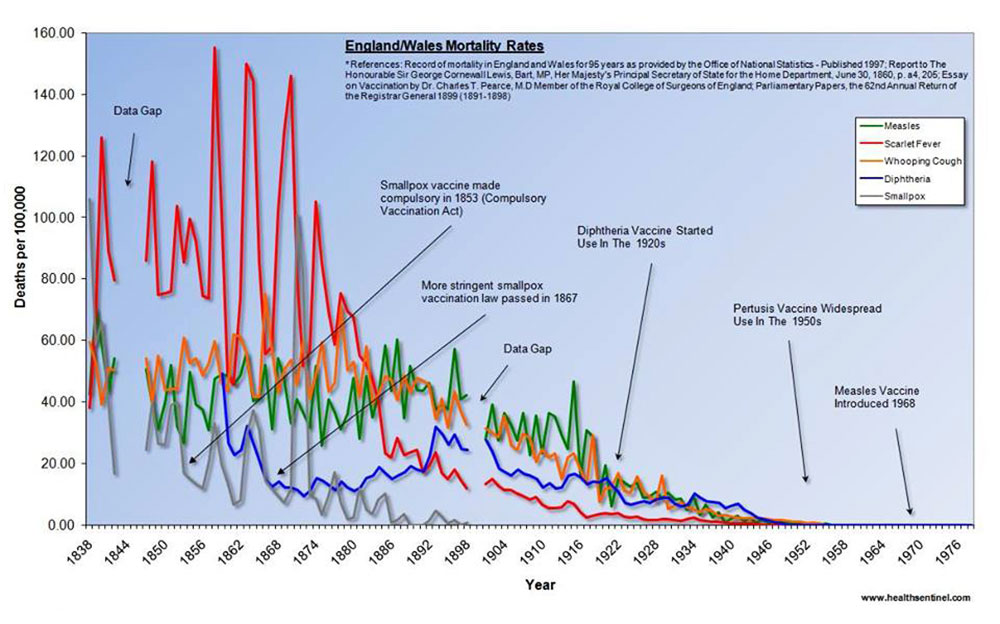
En este grafico se muestra como en el momento que se introdujeron las diferentes vacunas las enfermedades ya PRACTICAMENTE HABIAN DESAPARECIDO:
NO ES LA VACUNA LA QUE LAS CURO...FUERON LOS CAMBIOS A NIVEL DE HIGIENE, AGUA POTABLE, FRIGORIFICOS, VARIEDAD DE DIETA, MEJORAS EN EL TRABAJO, BAÑO EN LOS HOGARES, AGUA POTABLE.....ETC ETC...

Los medios de comunicación han hecho un gran trabajo en asegurar que el cuestionar este tema sea visto como pura herejía.
Pero hay  información muy real a tener en cuenta y que respalda las dudas al respecto.

Un gran ejemplo de la manipulacion a la que esta expuesta la poblacion mundial durante años y años es la supuesta revolucion que supusieron las vacunas . Un mito moderno que no tiene ningun fundamento , pero que no se puede discutir. 
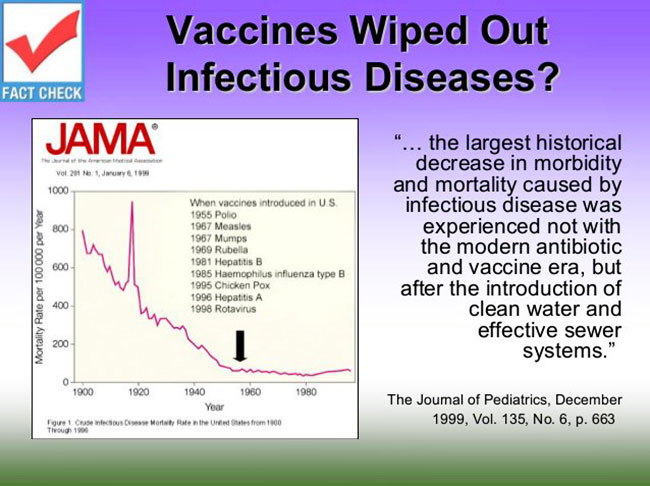
Aquí está un gráfico de la revista Journal of Pediatrics que ilustra cómo los sistemas de agua limpia y de alcantarillado causaron los mayores descensos en la mayoría de las enfermedades infecciosas, no las vacunaciones:


¿Las vacunas acabaron con las enfermedades infecciosas?

La mayor caída histórica en morbilidad y la mortalidad causada por enfermedades infecciosas fue experimentada no con la era del moderno antibiótico y vacuna, sino después de la introducción de sistemas eficaces de agua potable y alcantarillado.

The Journal of Pediatrics, December 1999, Vol. 135 Nº 6 p. 663

Diario de Pediatría, diciembre de 1999, Vol. 135 Nº 6 Pág. 663

Aquí hay otro eslabón clave sobre las vacunas desde un punto de vista honesto.    vídeo:


Aquí abajo una transcripción del vídeo para aquellos que no pueden entenderlo en ingles.


Ty Bollinger:
Pero ¿no las vacunas acabaron con todas las enfermedades transmisibles: la difteria, la tos ferina, la poliomielitis? No fueron las vacunas responsables de eso?


La Dra. Sherri Tenpenny (experta en vacunas):
Ya sabes, es interesante, porque cada vez que alguien es nuevo en este tema siempre inicia la conversacion con preguntas como:
"Bueno, ¿qué pasa con la viruela, ¿qué pasa con la polio?"
Bueno, yo hice una hora y media de conversación por lo que puedo tal vez darle dos frases que dicen que la respuesta es no.
Que menos del 10 por ciento de la población mundial estaba en realidad vacunado con la vacuna contra la viruela, y era un virus que se estaba muriendo y debilitándose con el tiempo, y cuando introdujimos la higiene y refrigeración, que es cuando la viruela comenzó a desaparecer.
Y luego, por supuesto, se transformó en este otro tipo de virus llamado viruela del simio, y así la viruela todavía está alrededor, sólo se le ha dado un nombre diferente. 

Lo mismo con la poliomielitis.
La epidemia de polio en este país estaba casi desaparecida antes de 1954, cuando Franklin Delano Roosevelt lanzó la vacuna contra la polio. Y no hemos visto nada más que farsa acerca de eso desde entonces. Y los únicos lugares en el mundo que aún reportan cualquier poliomielitis son lugares que están utilizando la vacuna oral contra la poliomielitis, que es un virus vivo. 

La otra cosa es que la polio no es sinónimo de parálisis, y que la gran mayoría de las personas no entienden que el 98 por ciento de las personas que en realidad fueron expuestos al virus de la polio, y tal vez incluso contrajeron la infección [que] causó la polio, y su manifestación fue nada más como un virus estomacal.

Era algo de diarrea, tal vez con un poco de fiebre, y usted pensó que quiza fuera una intoxicación alimentaria y luego tuvo inmunidad de por vida a este virus gastrointestinal. 
Pero hemos hecho un asombroso trabajo impregnando multi-generacionalmente en los cerebros de las personas acerca de pulmones de acero y niños pequeños con frenillos y personas con extremidades deformadas.

Eso sucedió con tan poca frecuencia en el cuadro grande, pero todavía tenemos este terror espantoso de la poliomielitis cuando realmente no deberíamos tenerlo. 

Quiero decir que hemos gastado miles de millones de dólares en todo el mundo para eliminar ese virus.
  • ¿Y tal si hubiéramos gastado esos miles de millones de dólares en agua potable, refrigeración y una mejor higiene?
  • ¿Qué podríamos haber hecho con eso?

----------------------- 

 .....y si LAS VACUNAS en lugar de eliminar enfermedades IMPIDEN QUE DESAPAREZCAN ?

--------------------- 

comentario de lector:
..."hablas con alguien y le mencionas a esa señora que ahora tiene más de 50 años que le pusieron la vacuna de la polio y es que en todos los pueblos hay uno, esa persona enferma deforme que cojea o tiene un brazo mal y están ahí a la vista de todo el mundo sabe que es por la vacuna de la polio,.... y sin embargo  han seguido vacunando a sus hijos como ovejas, ahí los tienes pidiendo cuarentena y vacuna por supuesto,....


Everything You Learned About The Cause of Polio Is Wrong

Pesticides and Polio


Pesticides and Polio
Originally titled, "A Critique Of Scientific Literature: Pesticides and Polio," this article by Jim West was first published in The Townsend Letter for Doctors and Patients, June 2000, then republished as a 2nd edition in 2002 by The Weston A. Price Foundation, with additional material and the editorship of Sally Fallon. The article summarizes his book, "DDT/Polio", which he had attempted to publish in 1998. This is a 3rd edition, August 14, 2015.

Warning 

It has been alleged that DDT causes or contributes to a wide variety of diseases of humans and animals not previously recognized as associated with any chemical. Such diseases included... poliomyelitis, ...such irresponsible claims could produce great harm and, if taken seriously, even interfere with scientific search for true causes...[1] (Handbook of Pesticide Toxicology, edited by Wayland J. Hayes, Jr. and Edward R. Laws, 1991)
Hayes and Laws were informing their readers about the heretic, Dr. Morton S. Biskind.
In 1953, when Biskind's writings were published, the United States had just endured its greatest polio epidemic. The entire public was steeped in dramatic images — a predatory poliovirus, nearly a million dead and paralyzed children, iron lungs, struggling doctors and dedicated nurses. The late president Franklin D. Roosevelt had been memorialized as a polio victim who was infected with the deadly poliovirus near the beautiful and remote island of Campobello. The media was saturated with positive images of scientific progress and the marvels of DDT to kill disease-carrying mosquitoes. Jonas Salk was in the wings, preparing to be moved center stage.

Through this intellectually paralyzing atmosphere, Dr. Biskind had the composure to argue what he thought was the most obvious explanation for the polio epidemic: Central nervous system diseases such as polio are actually the physiological and symptomatic manifestations of the ongoing government and industry sponsored inundation of the world's populace with central nervous system poisons.

Today, few remember this poignant writer who struggled with the issues of pesticides, issues that Rachel Carson would be allowed to politely bring to public awareness nine years later, as the lead story in The New Yorker magazine and then as a national best seller, by limiting her focus to the environment and wildlife. Biskind had the audacity to write about human damage.

I found "M.S. Biskind" in the endnotes to Hayes' and Laws' diatribe. What could possibly have motivated Hayes' and Laws' biased genuflection towards germ theory? Such offerings, commonly written into the final paragraphs of scientific articles, are usually done with an appearance of impartiality. With great anticipation, I went to a medical library and found Biskind's 10-page 1953 article in the American Journal of Digestive Diseases.[2] Presented below are excerpts regarding polio from his article.
In 1945, against the advice of investigators who had studied the pharmacology of the compound and found it dangerous for all forms of life, DDT (chlorophenoethane, dichlorodiphenyl-trichloroethane) was released in the United States and other countries for general use by the public as an insecticide. 
[...]
Since the last war there have been a number of curious changes in the incidence of certain ailments and the development of new syndromes never before observed. A most significant feature of this situation is that both man and all his domestic animals have simultaneously been affected.
In man, the incidence of poliomyelitis has risen sharply; 
[...]
It was even known by 1945 that DDT is stored in the body fat of mammals and appears in the milk. With this foreknowledge the series of catastrophic events that followed the most intensive campaign of mass poisoning in known human history, should not have surprised the experts.
Yet, far from admitting a causal relationship so obvious that in any other field of biology it would be instantly accepted, virtually the entire apparatus of communication, lay and scientific alike, has been devoted to denying, concealing, suppressing, distorting and attempts to convert into its opposite, the overwhelming evidence. Libel, slander and economic boycott have not been overlooked in this campaign. 
[...]
Early in 1949, as a result of studies during the previous year, the author published reports implicating DDT preparations in the syndrome widely attributed to a "virus-X" in man, in "X-disease" in cattle and in often fatal syndromes in dogs and cats. The relationship was promptly denied by government officials, who provided no evidence to contest the author's observations but relied solely on the prestige of government authority and sheer numbers of experts to bolster their position.
[...]
["X-disease"] ...studied by the author following known exposure to DDT and related compounds and over and over again in the same patients, each time following known exposure. We have described the syndrome as follows: 
...In acute exacerbations, mild clonic convulsions involving mainly the legs, have been observed. Several young children exposed to DDT developed a limp lasting from 2 or 3 days to a week or more. 
[...]
Simultaneously with the occurrence of this disorder [X-disease] a number of related changes occurred in the incidence of known diseases. The most striking of these is poliomyelitis. In the United States the incidence of polio had been increasing prior to 1945 at a fairly constant rate, but its epidemiologic characteristics remained unchanged. Beginning in 1946 the rate of increase more than doubled. Since then remarkable changes in the character of the disease have been noted. Contrary to all past experience, the disease has remained epidemic year after year.

DDT vs Polio (1945-1953) 

In the graph below, I provide confirmation of Biskind's observations for 1945-1953, in terms of polio incidence and pesticide production. I have utilized pesticide data from Hayes and Laws which they had derived from US Tariff Commission data. Polio incidence data was gathered from US Vital Statistics.[3],[4] Although I argue herein against Hayes' characterization of Biskind's work, credit goes to Hayes for publishing arcane pesticide data. All graphs refer to paralytic polio.
Pesticides and Polio

Physiological Evidence 

Biskind also describes physiological evidence of DDT poisoning that resembles polio physiology:
Particularly relevant to recent aspects of this problem are neglected studies by Lillie and his collaborators of the National Institutes of Health, published in 1944 and 1947 respectively, which showed that DDT may produce degeneration of the anterior horn cells of the spinal cord in animals. These changes do not occur regularly in exposed animals any more than they do in human beings, but they do appear often enough to be significant.
He continues, bearing his exasperation in trying to make the obvious plain.
When the population is exposed to a chemical agent known to produce in animals lesions in the spinal cord resembling those in human polio, and thereafter the latter disease increases sharply in incidence and maintains its epidemic character year after year, is it unreasonable to suspect an etiologic relationship?
Before finding Biskind's work, I had spent months engaged in a nearly futile search for the physiology of acute DDT poisoning. I began to sense that American DDT literature as a whole intends to convey that DDT is not dangerous except with regard to its general environmental effects due to persistent bioaccumulation, and that the physiology of acute DDT poisoning is therefore trivial. DDT literature uniformly jumps from descriptions of symptoms, over physiology, to the biochemistry of DDT-caused dysfunction in nerve tissue.
It was as though detectives had come upon a mass-murder scene and immediately became obsessed with the biochemistry of dying cells around bullet holes, while ignoring the bullet holes.
Eventually, I did find a German study of the physiology of acute DDT poisoning, by Daniel Dresden.[5] (Physiological Investigations Into The Action Of DDT, G.W. Van Der Wiel & Co., 1949) This study confirms that DDT poisoning often causes polio-like physiology:
Conspicuous histological degeneration was, however, often found in the central nervous system. The most striking ones were found in the cerebellum, mainly in the nucleus dentatus and the cortex cells. Among other things an increase of the neuroglia and a necrotic degeneration and resorption of ganglionic cells was found. The Purkinje cells were less seriously affected than the other neurons. Also in the spinal cord abnormalities of a degenerative nature were found. 
...such changes were not found invariably... there is neither an obvious relation between the size and spreading of the lesion and the quantity of DDT applied... information of adequate precision about the nature of the anomalies is lacking. 
So we find that especially the cerebellum and the spinal cord are histologically affected by DDT.
And more recently, in the works of Ralph Scobey, MD, I found that from ancient times to the early 20th century, the symptoms and physiology of paralytic poliomyelitis were often described as the results of poisoning. It wasn't until the mid-19th century that the word "poliomyelitis" became the designation for the paralytic effects of both severe poisoning and polio-like diseases assumed to be germ-caused.[6]

In contemporary Britain, a farmer-turned-scientist, Mark Purdey, has found substantial evidence that Mad Cow Disease, a form of polio-like encephalitis, was caused by a government-mandated cattle treatment consisting of organophosphate pesticide and a compound similar to thalidomide.[7] Unlike most scientists, Mark Purdey became legally embroiled with the government during his research.[8]

Morton S. Biskind had the courage to write about humans. His views fell into disfavor after the introduction of the polio vaccines, which was a grand act that proved in most people's minds that polio was caused by a virus. By October, 1955, Biskind, whose works had been published in established medical journals and who testified before the Senate on the dangers of pesticides, was forced to self-publish his writings, one of which I found while browsing through an old card catalog. A scan of Medline/Pubmed[9] found no other works by him except for a very tame article in 1972, warning that diseases incurred during a patient's stay in a hospital are not necessarily due to microbes. He died not long thereafter, in his late 60s. I don't have the precise date of death, though his birth was in 1906.

A Contemporary Study 

Below are three graphs that confirm Biskind, utilizing data that spans far beyond his observations. Due to the paucity of data regarding pesticide exposure and locale, these findings of production data are presented as an indication of exposure, keeping in mind the great changes in public awareness and legislation beginning circa 1950, which also served to reduce DDT exposure. Pesticide production data comes from Hayes and Laws.

DDT vs Polio (1940-1970) 
In this graph I did not include DDT data for the period of 1954 onward because DDT distribution was then being shifted out of the U.S. and into developing nations, while its U.S. production skyrocketed.

Governmental hearings, including those with Biskind, Scobey and others, brought about greater awareness of DDT dangers, as well as better labeling and handling methods.[10] Due to public governmental debate in 1949-51 and numerous policy and legislative changes afterward, DDT production figures after these dates do not correlate with US usage or exposure to DDT.[11],[12],[13]
Pesticides and Polio
DDT Before 1950
Before 1950, DDT was hailed as a miracle of progress that was virtually non-toxic to humans, in spite of FDA's warnings and attempts to keep it off the market. This photo on the left is one of several similar photos from Zimmerman, et al, DDT: Killer of Killers (1946). The advertisement on the right is from an unknown source, though it appears to be circa 1954.
Pesticides and Polio

Other photos in Zimmerman advocate 5% DDT solution sprayed directly on dairy cows (body, feed, and water):

Pesticides and Polio
This promotion of highly questionable products is reflected in present-day genetically engineered food campaigns.

DDT after 1950
Governmental hearings, including Biskind and Scobey, and others, eventually brought about greater awareness of the dangers, better labeling and handling methods.

DDT after 1954
This period is given special consideration for DDT.
After 1954, DDT production increased tremendously, but mainly as an export product. Due to public governmental debate in 1950-51 and numerous policy and legislative changes afterward, its production figures thereon do not at all correlate with U.S. usage or exposure to DDT.
As many studies demonstrate, DDT exposure after 1954 declined sharply, and this decline is represented in the following graph, along with supporting data. DDT production is not shown, post-1954.

Historical context: DDT was incriminated from 1950 until its registration cancelation in 1968 and ban in 1972. Thus, 1950-1951 represents a point of increased public awareness, changes in legislation and policy, voluntary phase-out, and labeling requirements. It is significant for this comparison of DDT against infantile paralysis, that before the period of increased awareness, DDT was mandated on dairies, yet afterward, ruled out of dairies. Much of the domestic usage was shifted to forestry applications, placing less DDT directly into the food chain.

The visual impact of all the persistent pesticide graphs rests upon the assumption that production correlated with human exposure. Given the lack of regulation and the extreme media hype surrounding DDT before 1953, this is not an unrealistic assumption.

It is clear that post-1954 DDT production did not correlate with human exposure. Yet, it is possible to estimate relative values for exposure post-1954. This can be accomplished by reviewing DDT levels in adipose tissue (National Adipose Tissue Survey, and other studies),[14] considering DDT in imported food, and considering the daily amounts of ingested DDT.
The early trend of National Adipose Tissue Survey's can be interpolated back to 1944, six years from 1950, the first Survey year, because it is safe to assume that DDT tissue levels were zero in 1944, since DDT was introduced for domestic usage in 1945. The estimate of DDT exposure is a reasonable because DDT has a half-life of about one year. To achieve any downward trend in the DDT/adipose line, DDT exposure had to have decreased sharply.
Note that no scale is provided for "relative DDT exposure". The Survey values are presented without distortion, linearly, with the starting point at 1954, and values for are estimates based on the Survey and DDT ingestion data.
Error is limited by two boundaries, for the estimated values of DDT exposure. 1) Exposure's downward slope must be much greater than the Survey line's downward slope, because of DDT's half-life. 2) Exposure values must continue at least through 1968.
Pesticides and Polio
Hayes and Laws also used a secondary evaluation, DDT intake per day, to explain that from 1954 to 1964-67, DDT ingestion decreased by an approximate factor of five. Significantly, the Salk vaccine program began in 1954.
The observed decrease in the concentration of DDT in food (Walker et al., 1954; Durham et al., 1965a; Duggan, 1968) offers an adequate reason for the decrease in storage in people. The average intake of p,p'-DDT and of total DDT-derived material was 0.178 and 0.280 mg/human/day, respectively, in 1954, but only 0.028 and 0.063 mg/human/day, respectively, during the period 1964-1967. (Hayes and Laws, page 303)

BHC vs Polio (1940-1970) 
BHC (benzene hexachloride), a persistent, organochlorine pesticide, is several times more lethal than DDT, in terms of LD50, i.e., the lethal dosage required to kill 50 percent of a test population.
"Unlike the situation with DDT, in which there have been few recorded fatalities, there have been a number of fatalities following poisoning by the cyclodiene and hexachlorocyclohexane-type insecticides. The chlorinated cyclodiene insecticides are among the most toxic and environmentally persistent pesticides known." (Hayes & Laws)
As shown in the graph below, BHC was produced in 1945-1954 at quantities similar to DDT. In spite of BHC's lethal quality, it has received much less publicity than DDT. While DDT was banned for such things as an association with the thinning of eagles' eggs, BHC was phased out of production because it was found, after 15 years, to impart a bad taste to food. It is still used in developing nations. It is tempting to ask whether the highly public DDT was "fronting" for the more dangerous BHC. BHC's correlation with polio incidence is astonishing.
Pesticides and Polio
Lead-Arsenic vs. Polio (1940-1970)
After viewing the DDT and BHC graphs above, note that the period of 1940-46 is unaccounted for in terms of polio-pesticide correlation. The missing piece of the puzzle for this six-year period is supplied by the lead and arsenic compounds. These types of central nervous system ("CNS") poisons have been the central component of pesticides since their widespread use beginning approximately 1868 until the advent of the organochlorine pesticides in the early 1940s. For those who have thought that "organic" food was the norm before the release of DDT to the civilian sector in 1945, the immense production of lead-arsenic compounds presented in this graph is disappointing. This data requires a reconsideration of any perception regarding "natural" quantities of arsenic found in apple seeds, apricots, or almonds, where pesticides can accumulate systemically from contaminated earth.
Pesticides and Polio

Pesticide Composite: Summary
Just over three billion pounds of persistent pesticides are represented in the graph below.
Virtually all peaks and valleys correlate with a direct one-to-one relationship with each pesticide as it enters and leaves the US market. Generally, pesticide production precedes polio incidence by 1 to 2 years. I assume that this variation is due to variations in reporting methods and the time it takes to move pesticides from factory to warehouse, through distribution channels, onto the food crops and to the dinner table.
A composite of the three previous graphs, of the persistent pesticides — lead, arsenic, and the dominant organochlorines (DDT and BHC) — is represented in the following:
These four chemicals were not selected arbitrarily. These are representative of the major pesticides in use during the last major polio epidemic. They persist in the environment as neurotoxins that cause polio-like symptoms, polio-like physiology, and were dumped onto and into human food at dosage levels far above that approved by the FDA. They directly correlate with the incidence of various neurological diseases called "polio" before 1965. They were utilized, according to Biskind, in the "most intensive campaign of mass poisoning in known human history."

Virus Causation

A clear, direct, one-to-one relation between pesticides and paralytic polio over a period of 30 years with pesticides preceding polio incidence in the context of the CNS related physiology just described, leaves little room for complicated virus arguments, even as a co-factor, unless there exists a rigorous proof for virus causation. Polio shows no movement independent from pesticide movement as one would expect for the virus model.
Medical propagandists promote images of a predatory, infectious virus, invading the body and quickly replicating to a level that causes disease, however, in the laboratory, poliovirus does not easily behave in such a predatory manner. Attempts to demonstrate virus causation are performed under extremely artificial and aberrant conditions.
Poliovirus causation was first established in the mainstream mind by publications of an experiment by Landsteiner and Popper in Germany, 1908-1909. Their method was to inject a purée of diseased tissue into two monkeys, "injected into the abdominal cavity". One monkey died after six days and the other was sickened.[15]
Proof of poliovirus causation was headlined by orthodoxy. This, however, was an assumption — not a proof — of virus causation. The weakness of this method is obvious to everyone except certain viropathologists and has recently been criticized by the molecular biologist Peter Duesberg regarding a modern-day attempt to establish virus causation for kuru, another CNS disease.[16]
Since 1908, the basic test, as intracranial injection, has been repeated successfully many times, using monkeys, dogs and genetically altered mice. However, a crucial weakness exists — polio epidemics do not occur via injections of poliovirus isolate into the brains of the victims through a hole drilled in their skull — except, of course, in laboratories and hospitals.
If injection into the brain is really a valid test for causation then it should serve especially well as a proof for pesticide causation. I propose that pesticides be injected directly into the brains of test animals. If paralysis and nerve degeneration subsequently occur, we then would have proved that pesticides cause polio.
Going further, towards much higher standards of proof than those used to prove virus causation, pesticides could be fed to animals and found to cause CNS disease. This has already been done with DDT and the histology of the spine and brain was poliomyelitis. Virus proofs require injection, often intracranial, to get any reaction from the experimental animal. It is axiomatic that a theory is only as good as its ability to predict future events. I predict that such a test would prove pesticides to be the most reliable causative factor.
The injection of purée of diseased brain tissue into the brains of dogs was the method preferred by Louis Pasteur to establish virus causation with rabies, another CNS disease. A recent, definitive biography of Pasteur finds him to be a most important publicist for germ theory, a crucial promoter for the notion that rabies is caused by a virus. Unfortunately, his rabies experiments were biased and unsupported by independent studies.[17] (G. L. Geison, The Private Science of Louis Pasteur, 1995)
Therefore, in my opinion, even a cofactor theory, where pesticides catalyze predatory poliovirus activity, or where pesticides weaken the immune system to allow opportunistic predatory poliovirus activity, cannot stand up to simple, common sense explanations that include the concept of a symbiotic virus. Neurotoxins are enough of a cause for neurological disease.
The most obvious theory — pesticide causation — should be the dominant theory. But the opposite exists, a pervasive silence regarding pesticide causation juxtaposed against a steady stream of drama regarding virus causation. In light of the evidence presented herein, the silence could ultimately discredit mainstream medical science, institutions of the environmental movement, and the World Health Organization (which directs both DDT application for mosquito campaigns and polio vaccination, world-wide).

Virus Presence

When the symptoms of polio are recognized, there is often a claim of virus presence in the body of the polio victim. Sometimes a virus is found. Sometimes that virus is an enterovirus (a virus of the digestive tract). Sometimes that enterovirus is a poliovirus. During polio epidemics, orthodoxy blames the poliovirus, and therefore, my argument for the innocence of the poliovirus requires an explanation of these claims of virus presence and the presence of an agent called the poliovirus. Here are three points:
a) Economic Impetus: During the great epidemic of 1942-1962 polio victims were diagnosed with poliovirus-caused polio, regardless of whether or not the poliovirus was found, because the NFIP (March of Dimes) funds paid only for this kind of polio. Therefore, if patients were going to spend time hospitalized, in iron lungs and undergoing therapy, it would have been economically imperative for the hospital to diagnose them in this way.[18]Thus, presence of poliovirus in poliomyelitis was rarely determined in order to arrive at a diagnosis of polio.

b) Other Pathogens: Even if one believes in virus culpability, other viruses are also claimed by orthodoxy to be the cause of polio-like CNS diseases which are "clinically indistinguishable" from polio. In the 1940-50s, relatively few polio victims were confirmed technically for presence of the poliovirus. In 1958, a laboratory analyses of 222 diagnosed polio victims (Detroit epidemic) found poliovirus in only 51% of the cases.[19] When multiple pathogens are hunted, a mix of pathogens, multiple viruses, fungi, and bacteria, can be associated with a single diagnosed case of polio.[20]
Coxsackievirus and echoviruses can cause paralytic syndromes that are clinically indistinguishable from paralytic poliomyelitis.[21] (John H. Menkes, Textbook Of Child Neurology, 5th ed., 1995, p420)
During a polio epidemic, such cases would have likely been diagnosed as "polio". After the 1970s, with the supposed approaching extinction of the poliovirus, such cases would have been diagnosed as encephalitis or meningitis.
c) Benign Virus: The poliovirus is considered to have been endemic throughout the world going back to ancient times, yet this is not the case with paralytic polio. According to Arno Karlen, author of Man and Microbes, the
"polio virus lives only in people; it probably adapted to the human small intestine countless millennia ago." He continues, ". . . some historians have claimed that [paralytic] polio goes back to ancient Egypt; it may, but the evidence is thin."[22]
Karlen makes a lot of sense here in view of the pesticide graphs, Biskind's arguments, and ancient historians describing paralysis from the inhalation of vaporized chemicals during blacksmithing operations. However, Karlen goes on to write that "the first undisputed case dates from the late eighteenth century." This statement, however, must be invalid (in its attempt to establish polio images that have a basis in early history) because of Menkes' statement (above) that other viruses can also be causative for polio symptoms and because common industrial poisons such as arsenic and lead compounds can cause polio-like symptoms. Poisoning by arsenic, as a method of assassination, has also been frequently employed from the earliest eras, and it is not unreasonable to assume that unsuccessful poisonings would have left their victims paralyzed.
Orthodox medical literature can offer no evidence that the poliovirus was anything else than benign until the first polio epidemic, which occurred in Sweden in 1887. This small epidemic occurred 13 years after the invention of DDT in Germany, in 1874, and 14 years after the invention of the first mechanical pesticide crop sprayer, which was used to spray formulations of water, kerosene, soap and arsenic. The epidemic also occurred immediately following an unprecedented flurry of pesticide innovations. This is not to say that DDT was the actual cause of the first polio epidemic, as arsenic was then in widespread use, other organochlorines had been developed, and DDT is said to have been merely an academic exercise.
Poliovirus is categorized as an enterovirus. There are at least 72 known enteroviruses discovered to date. According to Duesberg, many enteroviruses are harmless "passenger viruses." In view of the material presented here, probably unknown to Duesberg, it is reasonable that we also view poliovirus as harmless outside of extreme laboratory conditions.

The Symbiotic Poliovirus 

Having now established the possibility of an innocent poliovirus, its presence in polio can be explained as follows, with five more points:
a) Accelerated Genetic Recombination: Genetic recombination is accelerated whenever a biological system is threatened.[23] Pesticides can be that threat. The proliferation of viruses is known to be part of the process of accelerated genetic recombination.
b) The SOS Response: When a cell is critically threatened, accelerated genetic recombination (which may include virus proliferation) is just one of a set of events that may occur. This set of events is called the "SOS response," which is known to be triggered by exposure to toxic chemicals or radiation.[24]
Arnold Levine, writing in Field's Virology, provides an example:
"When lysogenic bacteria were lysed [split open] from without, no virus was detected. But from time to time a bacterium spontaneously lysed and produced many viruses. The influence of ultraviolet light in inducing the release of these viruses was a key observation that began to outline this curious relation between a virus and its host."[25]
Is this mere irony? Common medical procedures such as chemotherapy, radiation therapy, and the use of toxic pharmaceuticals accelerate genetic recombination and thus the potential for a necessary virus proliferation.
c) The Ames Assay Test: The SOS response is utilized in the Ames Assay Test, a standard test whereby chemical toxicity is determined. According to the procedure, bacteria are exposed to a chemical solution in question, and if a genetic recombination accelerates via the spontaneous proliferation of viruses from these bacteria, then the chemical is determined to be a poison. The phenomenon is analogous to a poker player with a bad hand who must request an exchange of cards and a reshuffled deck to improve the possibilities for survival. In the Ames Assay Test, bacteria are concerned with their genetic "hand" in order to improve their abilities to metabolize poisons, create utilizations for poisons, and shield against poisons. Thus they engage in this well-known phenomena of "gene shuffling," facilitated by virus proliferation.
Thus, I propose that the poliovirus is a symbiotic (and possibly a dormant) virus that behaves in a manner suggested by the phenomenon found in the Ames Assay Test, a test used to determine toxicity.
One could object to this analogy on the grounds that because the Ames Test utilizes prokaryote cells (bacteria-like cells) rather than eukaryote cells (nucleus-containing cells that comprise multicellular tissue) and because it is asserted that poliovirus invokes damage by infecting eukaryote cells, the explanation is invalid. However, the evolution of eukaryotes includes structures and functions inherited from symbiotic unions of prokaryotes. Eukaryotes continue to possess to this day prokaryote functionality such as found in the genetic independence of the organelles within the eukaryote cells, such as mitochondria (Lynn Margulis and Dorion Sagan, What Is Life? (1995), and, Lynn Margulis, Dorion Sagan, Slanted Truths: Essays on Gaia, Symbiosis, and Evolution (1997)). Thus, generalizations derived from the Ames Test can contribute well to a valid hypothesis for the presence of poliovirus in "polio".
d) Dormant Virus: When a cell is critically threatened by toxic chemicals (or radiation) it can invoke survival mechanisms (the SOS Response) such as the suspension of metabolism, or the activation of dormant viruses, triggering their proliferation from the cell — such viruses are said to be "dormant" or "latent". These words are not my preference because the way that they are popularly used implies that viruses are only externally generated and are found in the cell in a condition of temporary rest (dormancy). In cyclical phenomena, such as the life cycle of the virus, the "starting point" is a political-philosophical decision. The orthodox virus image (possibly a projection of the orthodox mind) is of an external, selfish, non-living parasite that tricks cells into infecting themselves with the virus and then to replicate said virus with cell machinery. Dormant viruses are publicized as external life forms that spend most of their time (as much as several decades) waiting inside cells, awaiting activation to perform parasitic activities.
Recently it has become known that a tremendous amount of human DNA is devoted to virus proliferation. The virologist, Eleni Papadopulos-Eleopulos, stated in Continuum, Autumn 1997:
...it's accepted that endogenous retroviral DNA forms about 1% of human DNA... that's about 3,000 times larger than what the experts claim is the size of the HIV genome. And what's more, new retroviral genomes can arise by rearrangements and recombination of existing retroviral genomes.
Like the retroviruses, the poliovirus is an RNA virus and has a genome of similar weight and length. There is suspicion of dormant characteristics because enteroviruses have been found by several independent investigators, in post-polio (PMID: 8818905, UI: 96415998 (Lyon, France, Aug., 1996) and others).
e) Gene Sharing: Viruses represent shared capability, shared data, and data in transit. They are genetic couriers. Shared data decreases the burden on each cell to carry all capabilities. Capability, in the form of genetic information, can be stored in the environment as virus "gene packets", and different capabilities can be stored in different cells, just as humans each have, to some degree, uncommon capabilities which are shared with the community as needed. In the microbiotic world, when a specific capability is needed, cells share genetic information from the dynamically changing universal library of free floating genetic material, such as exists in viruses, free organelles, symbiotic parasites, and free nucleic acid, in addition to straight sexual intercourse where nucleic acid is transferred directly form cell to cell. It could be said that cells can carry dormant genetic information in the form of nucleic acid and when that information is required, share it through the proliferation of viruses.
For example, in terms of disease, a symbiotic virus presence could be explained as a provider of cathartic capabilities or mechanisms, appropriate for various toxic or stressed environments. These cathartic mechanisms are manifested as disease symptoms, in the form of masses of sacrificed leucocytes, obviously found in boils, pimples, and pocks. Orthodoxy gives the label "transduction" to the processes of virus infection. Transduction is one of several modes of intercellular transport of genetic material, which allows for direct, laterally passed genetic data. Such data is routinely used to alter cell structure and metabolism modes dynamically, without engaging in the slower, more formal, sexual reproduction cycles.
The concept of the symbiotic virus is explained in Encyclopedia Britannica, Macropaedia (1990) p507:
Although viruses were originally discovered and characterized because of the diseases they cause, most viruses that infect bacteria, plants, and animals (including humans) do not cause disease. In fact, bacteriophages [bacteria viruses] may be helpful in that they rapidly transfer genetic information from one bacterium to another, and viruses of plants and animals may convey genetic information among similar species, aiding the survival of their hosts in hostile environments.
Britannica continues with a praise of industrial biotechnology, and abruptly converts the probable-present into a future-made-possible by dependent consumers:
This could in the future be true for humans as well. Recombinant DNA biotechnology may allow genetic defects to be repaired by injecting afflicted persons with harmless viruses that carry and integrate functional genes to supplant defective ones.
The implication is that humans are not part of nature, however, in the next sentence Britannica states that we humans may already utilize symbiotic viruses:
Such events may actually occur in nature in the transmission of "good" viruses from one person to another.
The nature-friendly view, that viruses are effective genetic symbionts, dilutes the market impact of genetic-based treatments alluded to by Britannica, and threatens biotech profits. Perhaps this explains certain aspects of the current worldwide "war" against virus-carrying mosquitoes?

Virus Contradictions

The concept of a predatory poliovirus becomes less certain in the context of these little known virus "facts":
1. Poliovirus "[I]nfectosomes have yet to be experimentally demonstrated...", writes Roland R. Rueckert, under the subtitle, "Infection: A Rare Event" in Fields Virology.
2. "Eukaryote cells have a wide arsenal of activities to control the half-lives of mRNAs, and these nucleases have made it difficult to isolate intact RNA viral genomes from cells." ("Virus Evolution", Ellen G. Strauss, et al, Fields Virology, Lippincott - Raven Publishers, Philadelphia (1996), v1p163)
In view of item 1, Rueckert, this appears to be another careful way of saying "never".
3. The poliovirus does not always infect in accordance to its notoriety, "For every 200 or so virus particles that encounter a cell, only one will successfully enter and replicate, so research in this area is often confounded by the rarity of successful entry." (http://cumicro2.cpmc.columbia.edu/PICO/Chapters/Cellular.html (defunct link))
4. Only herpesvirus has been traced enroute to site of disease from site of infection. "Viruses during retrograde transport on their way up to the cell bodies have so far been localized ultrastructurally only in the case of herpes simplex and herpes virus suis." (Martin E. Schwab and Hans Thoenen, Encyclopedia of Neuroscience, edited by George Adelman, pub, Birkhaüser Bros. Inc., Boston, 1987, Chapter 39, p102-3)
5. A "poliovirus" has been electrophotographed in cell tissue. Due the lack of any photos of the virus as an infectosome, these photos should be interpreted as evidence of the cell's SOS response rather than of poliovirus causation. Electrophotography has existed for several decades and has yet to photograph a poliovirus infectosome. An infectosome is a "membrane-associated particle... which transfers genomic viral RNA through the membrane." (Field's Virology, 1996, p635)
6. "It seems likely that all viruses trace their origins to cellular genes and can be considered as pieces of rogue nucleic acids." (Encyclopedia Britannica, Micropaedia, 1997, "Virus")
This demonstrates the great potential for a symbiotic relation between viruses and "hosts".
7. The point in history when known viruses began their evolution has been calculated by molecular biochemists who have interpolated backwards through time the speed and direction of virus evolution. They found that "most viruses we know today have probably evolved since the last ice age." ("Virus Evolution", Ellen G. Strauss, et al, Fields Virology, 1996, p164)
8. Viruses are involved in a process called transduction, one of the three modes of genetic transfer between cells, a process that can accelerate genetic recombination when cells are critically threatened by poisons.
9. Virus infection is used by clone technology to transfer genetic material into cells.
10. "Genetic information moves between viruses and their hosts to the point where definitions and classifications begin to blur." (Fields Virology, 1996, p6)
11. In terms of genetic similarity, "[T]here was a remarkable continuum..." from virus to host. (Fields Virology, 1996, p6)
12. "Carrel (1926) was able to produce tumors resembling Rous' sarcoma and transmissible by cell-free filtrates with indol, arsenic, or tar in chicken embryo. Carrel's observations have been confirmed by other workers. Fischer (1926), by treating cultures of normal cells with arsenic obtained on one occasion a filtrable virus capable of causing tumors." (Ralph R. Scobey, M.D., "Poliomyelitis Caused by Exogenous Virus?", Science, v71, 1954)

Redefinition

Any of the items listed above can be used to direct work towards a refreshing view of viropathology. For instance, Alexis Carrel and Albert Fischer's experiments, in 1925-1926, preceded the discovery of the cellular SOS Response by decades. Their work is important in its impact on the basic tenants of viropathology, the contemporary proofs of virus causation, and definitions of immunity. Carrel, who happens to be one of the most recognized of all the Nobel Laureates, has stated without equivocation that the Rous sarcoma tumour is not infective, is caused by an agent within the cells themselves, yet is transmissible by cell-free Berkfeld filtrate of tumour extract. He states that the agent could not be a virus because of his assumption that a virus is an external, disease-causing, infectious entity. In retrospect such statements reveal the first (unrecognized) discovery of the dormant retrovirus. Carrel also clearly demonstrates poison causation for cancer. These landmark experiments are very simple, very clear, and totally ignored by orthodoxy.
If one views Carrel and Fischer as a reinforcement of the symbiotic virus paradigm, then two strong alternative views can be defined regarding work that has been based on injections:
Virus Disease: In the case of classical induction of disease by injection of extremely high quantities of virus, the alternative view would be that the presence of such quantities of virus serve as an informational context, a context that indicates imminent toxic death to naïve tissue, with an expected tissue reaction (disease). Or in other words, disease induction (via injection) is no more than an over-reaction (like jumping out of a window when someone yells "fire") in terms of inflammation and catharsis (disease manifestations).
Immunity: In the case of the classical demonstration of immunity whereby surviving subjects are found immune to attempts to induce disease by subsequent injections of virus, the alternative view is — you can't fool them twice.
Thus, a) inducement of disease by the injection of high-quantities of virus, and b) acquired immunity in survivors of these injections, can both be viewed as parlour tricks, though claimed to be demonstrations of virus causation for disease.

Conclusion

The word "virus" is ancient Latin, meaning "slime" or "poison". Mainstream science admits that most viruses are harmless, yet the word "virus" adds to a biased and highly promoted language of fear regarding nature. Definitions of viruses range from "pathogenic" to "not usually pathogenic" — the more popular the media source, the more frightening the definition. Less fearful definitions would change the relationship between the medical industry and its "patients".
Paradoxically, early virus studies considered virus filtrates to be a poison, not a microbe, thus the name virus. Today, we know that viruses are information.
Now, nearly a half-century later, the validity of Dr. Biskind's work appears even more certain. Again, according to Biskind:
It was even known by 1945 that DDT is stored in the body fat of mammals and appears in the milk. With this foreknowledge the series of catastrophic events that followed the most intensive campaign of mass poisoning in known human history, should not have surprised the experts. Yet, far from admitting a causal relationship so obvious that in any other field of biology it would be instantly accepted, virtually the entire apparatus of communication, lay and scientific alike, has been devoted to denying, concealing, suppressing, distorting and attempts to convert into its opposite, the overwhelming evidence. Libel, slander and economic boycott have not been overlooked in this campaign.
The unique correlations between CNS disease and CNS poisons present a variety of research opportunities not only in medical science, but political science, philosophy, media studies, psychology, and sociology.[26],[27],[28],[29],[30],[31]

Author's note, 2015:

This article describes a view of polio, faithful to the tenets of the original article of June 2000. Research has continued through the present, however. For more information, an evolution of facts and concepts, books and articles, see http://harvoa.org

The intent herein is to provide an impartial, scholarly analysis of CNS disease and chemical causation. Current research priorities are for proof of poliovirus causation and/or proof that invalidates chemical causation.
Corrections, uncredited sources and/or copyright infractions, if any, will be rectified upon notice. This site is not a monologue of truth. It is a catalyst for the reevaluation of "polio". The reader is urged to confront officials to clarify issues mentioned herein.


References

[1] Handbook of Pesticide Toxicology, edited by Wayland J. Hayes, Jr. and Edward R. Laws, Academic Press Inc., Harcourt Brace Jovanovich, Publishers, San Diego, 1991, p769.
[2] Morton S. Biskind, MD. "Public Health Aspects of the New Insecticides". American Journal of Digestive Diseases, New York, 1953, v 20, p331.
[3] U.S. Vital Statistics, U.S. Government Printing Office, Washington, D.C.
[4] Historical Statistics of the U.S., The U.S. Government Printing Office, Washington, D.C.
[5] Daniel Dresden, Physiological Investigations Into The Action Of DDT, G.W. Van Der Wiel & Co., Arnhem, 1949.
[6] Ralph R.Scobey, MD. "The Poison Cause of Poliomyelitis and Obstructions to Its Investigation." Archive of Pediatrics, April 1952.
[7] Mark Purdey's work can be found on the NIH website (PUBMED ID's 9572563, 8735882, 8735881) and in Wise Traditions, Spring 2000 and Spring 2002, Weston A. Price Foundation.
[8] WHALE, a medical criticism website, managed by John Scudamore. 
[9] Medline/Pubmed. http://www.nlm.nih.gov/bsd/pmresources.html
[10] Thomas R. Dunlap, DDT: Scientists, Citizens and Public Policy, Princeton University Press, 1981.
[11] Public Law 518, Federal Statutes, Volume 68, 1954, p 511.
[12] Public Law 905, Federal Statutes, 1956.
[13] "The Federal Insecticide, Fungicide and Rodenticide Act", Federal Statues, Volume 61, 1947, p 163.
[14] "The National Adipose Tissue Survey", reported in Handbook of Pesticide Toxicology, edited by Wayland J. Hayes, Jr. and Edward R. Laws, Academic Press Inc., Harcourt Brace Jovanovich, Publishers, San Diego, 1991, p 303.
[15] The Landsteiner and Popper study, first published in Germany, was reported in an article by Robert W Lovett, MD., "The Occurrence of Infantile Paralysis in Massachusetts in 1908". Boston Medical and Surgical Journal, July 22, 1909, page 112.
[16] Peter Duesberg and Brian J. Ellison, Inventing the AIDS Virus, Regnery Pub., 1996.
[17] Gerald L. Geison, The Private Science Of Louis Pasteur, Princeton University Press, 1995.
[18] Julie Silver. "Three Signs of Post Polio Problems", Accent on Living, Winter 1995, v 40.
[19] Centers for Disease Control, Polio Packet, 1959.
[20] Richard T. Johnson, at the Department of Neurology, Johns Hopkins University School of Medicine, published in Annals of the New York Academy of Sciences, 1995 and excerpted in Jane Colby, ME: The New Plague, First and Best in Education, Ltd, 1996.
[21] John H. Menkes, Textbook Of Child Neurology, 5th ed., Williams & Wilkins, 1995, p 420.
[22] Arno Karlen, Man and Microbes, G.P. Putnum's Sons, 1995.
[23] Molecular Approaches to Environmental Biology, edited by Pickup, R.W and J.R. Saunders, Ellis Horwood publishers, 1996.
[24] Mark Ptashne, A Genetic Switch, Cell Press and Blackwell Scientific Publications, 50 Church St., Cambridge, MA 02138, 1992.
[25] Fields Virology, edited by B.N. Fields and others, Lippincott-Raven Publishers, Philadelphia, 1996, p 6.
[26] Aristotle, The Politics, Penguin Classics, Penguin Books (1962, reprinted 1992)
[27] Casarett and Doull's Toxicology, The Basic Science of Poisons, 5th ed., pub. McGraw-Hill (1996)
[28] Lynn Margulis, Dorion Sagan, Slanted Truths: Essays on Gaia, Symbiosis, and Evolution, Copernicus, New York (1997)
[29] Robert S. Mendelsohn, M.D., Confessions of a Medical Heretic, Contemporary Books, Chicago (1979)
[30] Robert Richter and Ruth Norris, Pills, Pesticides And Profits, North River Press, Inc. (1982)
[31] Jack Trombadore, "An Introduction to Post Polio Syndrome", New Jersey Polio Network Newsletter, Fall (1995)


Jim West lives in New York City, where, since 1995, he has been involved as a researcher, writer, and speaker, critical of the politics of medical science. He served as Chairman of the Science Committee for the No Spray Coalition, which successfully litigated against the City of New York over the helicopter pesticide spray programs. He is a member of GreenSpeakers, a Toastmasters group. His published papers reveal strong evidence of environmental causation for polio, West Nile, SARS, and H1N1 epidemics. His recent book of human exposure studies indicts the practice of prenatal ultrasound.